Thursday, September 24, 2020

AIR MODE FOR CARGO TRANSPORTATION – DIFFERENT ASPECTS TO CONSIDER

Every task should be done in such a manner so that it should be properly implemented and complexity of activities becomes easy to understand. This is where Logistics comes into place. Effective, efficient, transportation and storage are the different aspects that we need to ensure. Freight Forwarder acts as an intermediary to ensure types of goods, to meet Customer’s requirements, and make arrangements for the means of transportation. 
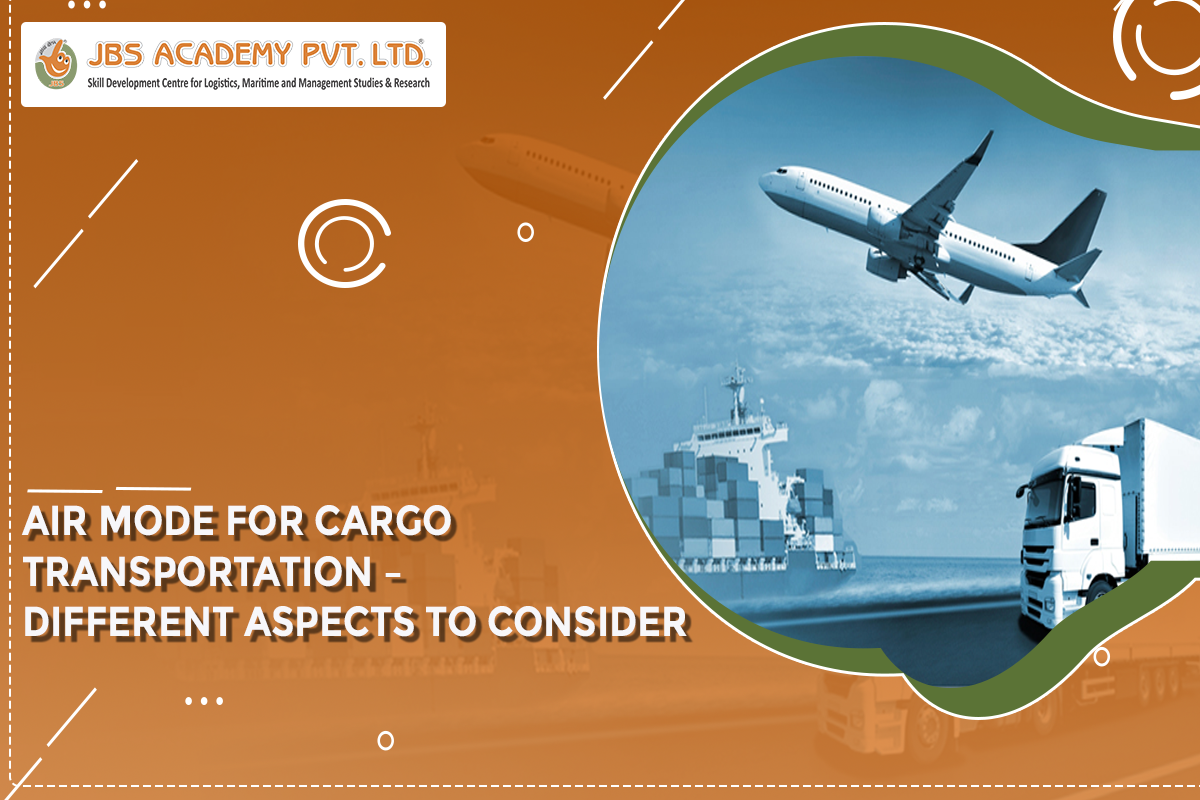


IATA (International Air Transport Association) ensures airline safety, security, efficiency and sustainability. IATA has major purpose to see that all the services are performed correctly, although, the other processes remain the same. IATA and Freight Forwarder has different roles to pay in Cargo transportation. The air mode for cargo transportation is preferred due to its valuable and time bound nature. 

The air mode of cargo is also used in cases where the goods are to be transported by the Exporter or Importer want to transport their high priority goods. It is more advanced than the sea mode of transportation of cargo too. International Freight Forwarding also takes place much easily through air mode for the cargo transportation.

What is Logistics, what is Transportation and different Modes, who is Freight Forwarder and scope, the role IATA and their purpose, relationship between Freight Forwarder and IATA, etc, are explained in this webinar in detail. 

The webinar session organised by JBS Academy on Air mode for Cargo Transportation – different aspects to consider was engaged by Prof. Surhid Oswald Fonseca, an Expert Logistician with 33 years of experience. He has an experience in Customs Clearance and consultancy and ensures the proper functioning of the services in the cargo industry. He worked with the sales team to add new accounts and kept the cost under control. Professor Surhid is a recipient of Nomination Awards Leaders of Tomorrow Awards 2010 & 2012. 

Webinar was attended by 165 students; it was very informative session where the students got to learn things which can play a key role in their success. Students raised their questions and were answered accordingly. The recorded webinar is available on YouTube.

To contact the experienced professional of Import-Export you can contact the team of JBS Academy at www.jbsacademy.com or chat with them on, info@jbsacademy.com team of professionals are always ready to answer all your questions and guide you for the best.


Thursday, September 17, 2020

How to export/import – introductory

Import and Export cater to a very big section of revenue generation in India. Especially since the dawn of Globalization, International Business has taken a high wave. Export can be understood as the process where the goods that are produced domestically using our very own resources, are transported to another country. This can be through air or sea. Import means the goods produced in a foreign country using foreign resources are transported into our country. Exporting leads to an increase in our national income while Importing helps increase our global presence.


The process of exporting is said to be highly complicated, and there is no need to understand every details either. Usually the Exporter outsources such procedures to an external agency. There are certain procedures that a person has to go through in order to Export goods, such as establishing an organization, opening a bank account, obtaining PAN, IEC, RCMC and finally selection of products for Import. Then there are steps like finding the right buyers, sampling of products, pricing, negotiation with buyers and so on. An important authority that looks over the trade practices across India is the Directorate General of Foreign Trade. They regulate the Free Trade Policy, create guidelines on importing and exporting and so on. They also facilitate benefit schemes and give guidance to Importers and Exporters. It is also important to know about the documents required for Customs Clearance in India for the process of Import and Export of goods to and from the country.

The webinar session organized by JBS Academy on Export/Import was engaged by Ms. Manisha Thaker who is the Vice President at Trialliance Global Solutions India Private Limited. She has over 20 years of experience in various sectors such as manufacturing, textiles, engineering and chemical industry.

Webinar was attended by 178 students; it was very informative session where the students got to learn things which can play a key role in their success. Students raised their questions and were answered accordingly. The recorded webinar is available on YouTube.

To contact the experienced professional of Import-Export you can contact the team of JBS Academy at www.jbsacademy.com or chat with them on, info@jbsacademy.com team of professionals are always ready to answer all your questions and guide you for the best.


Thursday, September 10, 2020

Finding the right freight forwarder training course

 International freight forwarders help importers and exporters to move out of the country or into virtually any country. It’s a little more complicated than that, but at least its essence. Not all freight transporter companies will do everything you need. Often a company will specialize in road freight transport, sea freight or sea freight, or just air fares. This makes it a little easier for freight forwarders to choose because freight courses are more compartmentalized, but that can still be a difficult case for many.


Learning import and export duties

In a way, international freight forwarding training manual can be seen as a kind of travel agent for the import-export services of international trade. When you look at it this way, it makes more sense to use a light sender. They are simply transporting your goods across the border, or arranging other trucking services to allow safe delivery of goods to other destinations.

Knowledge of legal documentation

Of course, shipping and forwarding international goods requires a lot of unequal documentation and logistics. This kind of thing scares most people, so, it would be a great relief to know that the freight and freight forwarding companies will do all such boring stuff for you. You need to tell him where to pick it up, where to drop it off and pay for freight costs and service. They will take him from there. It can't be easier! The freight forwarding process include all the details of the necessary documentation required for the transportation.

Organization and integration of goods

You can save money by enrolling yourself with a freight forwarding training manual. This is because they organize and integrate a lot of goods with different locations. In this way the value of each individual or company is reduced, what would happen if he were alone. An established and experienced freight forwarding company values ​​gold in its weight for money and it saves you headaches, so you are advised not to try to do so on your own. You can definitely if you really want to, but why bother?

Finding the right freight forwarding course

Not all international freight forwarders are the same. You believe that you should check the right points and shorten your choice until you choose the freight course. Prices and services will change. Also ask for references. You're a customer, so look for people who are more focused on customer service, as well as freight forwarding. Only when you are really ready should you choose the right international freight forwarder for you.


Thursday, September 3, 2020

UNDERSTANDING DIFFERENCE BETWEEN AIR CARGO AND SEA CARGO


In an Export Import business, different modes of transportation like Land, Air and Sea are made use for the movement of goods, and they play a significant role in connecting the buyer with the seller thereby fulfilling the demand of the buyer. The ocean shipping is the process of transporting goods to overseas buyers with the help of container ships. Basically, water transportation is of three types; through rivers and canals, coastal shipping and ocean transport. Air transport is one of the important modes of transportation which makes use of advanced technology. It offers the highest speed and a safe movement of the cargo, but is also one of the most expensive modes of transportation. Transport cost is influenced by factor like distance, volume, density, stow ability, handling, liability, and market factors.

A Freight Forwarder is a person who helps the Importers by maintaining contacts with carriers, liners and shippers.  A Freight Forwarder could help in deciding the Freight by providing information about rates and services offered. Information Technology also has an important role in Export and Import which helps in database management, data integration and provides speed, accuracy and customized reports. 

The webinar session on the differences between the two modes of transport conducted by JBS Academy was engaged by Professor Mrs Manisha Thakeran expert in Logistics and Freight Forwarding with an experience of about 20 years. She has managed many odd dimension and breakbulk cargo projects and has served many manufacturing companies. 

The recorded webinar session which was attended by about 140 students is available in our You Tube channel.

Thursday, August 27, 2020

International Cargo Operations at Airports

Any airport along with terminal for passengers should also provide space for Air Cargo movement. The passenger and Cargo terminal may provide either domestic movement alone, or both domestic and international movement. A Cargo terminal is used for the movement of Export and Import Cargo at the airport, and requires the presence and services of airlines and Customs. It consists of Export shed for handling Export Cargo and Import shed for handling Import Cargo.


The different modes of transport include Air, Water, Road and Rail transportation. Although Air transportation is costlier than the other, it is opted if there is an urgent requirement of the product, transportation time constraints for express or courier shipments and for goods like medicines or perishable goods. There are various types of aircrafts for carrying passengers or cargo or both. There are various authorities who certify the standard of transportation, handling and storage services and the major certifications include ISO, CEIV, AEO and RA.

The webinar session conducted by JBS Academy on the topic International Cargo Operations at Airports was taken by Mr. Sushant Nigam who is a Logistician with about 38 years of experience in international cargo. He also provides consultancy in various aspects of international cargo like regulatory issues and Process Re-engineering.

The webinar session titled International cargo operations at airport was attended by a total of 140 students, and the recorded webinar is available in our YouTube channel

Wednesday, August 19, 2020

Understanding Odd Dimension Cargo and RORO

Odd dimension Cargo includes materials that are used for projects in various industries and sectors like oil, gas and agriculture. Any material which is above the standard measurement for general Cargo is called Odd dimension Cargo. Out of Gauge Cargo or OOG refers to Cargo which far exceeds the dimensions of a normal shipping container of the dimension 20/40’ by length width and height, which need special equipments for loading and transporting.


The RORO shipping stands for Roll-on/ Roll-off and refers to the carriers which are used to carry vehicles or wheeled Cargo. These ships are specially designed with built in ramps to allow cars and other vehicles to easily slide in and out of the ship. The RORO vessels are of different types and includes Pure Car Carrier (PCC), Pure Car and Truck carrier (PCTC), and Container Vessel + RORO(CONRO). The RORO vessels are very important as they save time. Special attention is required for this type of shipping as the possible damage could be huge in terms of finance which may affect the business badly.  

 The webinar session on the differences between the two modes of transport conducted by JBS Academy was engaged by Professor Manisha Thaker, an Expert in Logistics and Freight Forwarding with an experience of about 20 years. She has managed many odd dimension and breakbulk Cargo projects and has served many manufacturing companies. 

 The webinar session on the topic Understanding Odd dimension Cargo and RORO was attended by about 151 students. The recorded webinar is available in our You Tube channel

Thursday, August 6, 2020

What are the key aspects of FEMA and How it is Associated with International Business?

India is under FEMA or Foreign Exchange Management Act, 1999 which came into effect on 1st June 2000. Any action or act by an individual in India is regulated under FEMA and so, it is mandatory to have an understanding of the provisions of FEMA before entering into Foreign Exchange business. The concept of FEMA originated during the balance of payment crisis of 1990- 1991. FEMA came into effect on 1st of June 2000 replacing FERA, 1973. FEMA comprises of 49 clauses while FERA had 81 sections and out of the 49, the first 15 are much important. It extends to the whole of India, and applies to all branches, offices and agencies outside India which is owned or controlled by a resident of India.

There are many organizations that are authorised for framing of rules and regulations and monitor the transactions under FEMA. The most important ones are the Ministry of Finance, Government of India, Ministry of Commerce, Reserve Bank, Foreign Exchange Dealers Association of India ,Export promotion council, EXIM bank, ECGC, ADs, FFMCs , GIC, Shipping & Airlines companies, and Exporters& Importers. The objective of FEMA, 1999 is to consolidate and amend the law relating to foreign exchange and facilitating external trade and payments and promoting orderly development and maintenance of foreign exchange market in India.

The webinar session organized by JBS Academy on FEMA was engaged by Mr. Kishor Bhatt, an expert logistician with over 54 years experience. He is a retired bank executive who is a chattered member of the Chartered Institute of Logistics and Transport. Mr. Bhatt is the author of about 22 books in the field of International Business and has contributed many scholarly articles to various magazines and publications.

The webinar session titled ‘FEMA- Understanding all aspects’ was attended by about 181 students. You can watch the recorded video of the webinar which is available in our YouTube channel.